People often treat focus as a matter of discipline. We are told to concentrate harder, manage time better, remove distractions, or simply push through. But mental clarity is rarely that simple.
Many parts of our biology and lived experience influence our ability to focus, including sleep, stress, emotional regulation, nervous system balance, brain patterns, environment, and overall health. When these systems are strained, the mind may feel scattered, reactive, foggy, or tired.
This does not mean the brain is broken. It may mean the brain and nervous system are asking for support. When we understand this connection, we can approach attention, emotional balance, and cognitive health with more compassion and greater precision.

Mental Clarity Is Not Just Willpower
Many people who struggle with focus blame themselves. They may feel frustrated that they cannot stay on task, finish what they start, remember details, or remain emotionally steady throughout the day. But attention is not only a matter of effort.
The brain is constantly responding to internal and external signals. Stress, poor sleep, emotional strain, constant digital input, social media stimulation, inflammation, trauma, hormonal changes, and environmental demands can affect how the brain filters information and regulates attention.
When the nervous system is under pressure, the mind may begin to prioritize urgency over reflection. The brain may scan for the next problem, interruption, responsibility, or perceived threat. In this state, focus becomes harder because the brain is not working from a place of calm organization. It is working from a place of demand.
This can show up as mental fatigue, forgetfulness, irritability, restlessness, trouble completing tasks, or feeling physically present but mentally elsewhere. These symptoms are not always signs of laziness or lack of motivation. Often, they are signs that the system is overloaded.
Neuroplasticity and the Capacity for Change
One of the most hopeful aspects of brain health is that the brain remains adaptable throughout life. This capacity is known as neuroplasticity.
Neuroplasticity refers to the brain’s ability to form new connections, strengthen existing pathways, and reorganize patterns in response to experience, learning, repetition, and support. This matters because many people assume their attention patterns, emotional responses, or mental habits are fixed. In reality, the brain is always responding to the way we live, rest, relate, think, and heal.
This does not mean change happens instantly. The brain often needs consistency, safety, awareness, and repetition to develop new patterns. But it does mean growth is possible. Focus can be supported. Emotional regulation can be strengthened. Mental clarity can improve when you better understand and care for the underlying systems.
Neuroplasticity is not about “hacking” the brain. It is about respecting the brain’s natural ability to adapt and creating the right conditions for healthier patterns to develop.
Sleep, Stress, and Emotional Regulation
Sleep, stress, and emotional regulation are closely connected to mental clarity. When sleep is disrupted, the brain has less opportunity to recover, process memory, and restore the flexibility needed for focus and emotional balance.
Poor sleep can make it harder to concentrate, regulate emotions, remember information, and respond calmly to stress. Stress can also interfere with sleep, creating a cycle in which the nervous system stays activated even when the body is tired.
Emotional regulation is part of this same conversation. It is not the absence of emotion. It is the ability to notice what is happening internally and respond with greater awareness, steadiness, and choice.
When the nervous system is strained, emotions may feel more intense or harder to manage. A person may become more reactive, avoidant, overwhelmed, or disconnected from themselves. Mindfulness and awareness practices can help by creating space between what we feel and how we respond. The goal isn’t to force calm, but to start noticing the patterns that shape our reactions.
Attention challenges can also overlap with conditions such as ADHD. For many people, ADHD is misunderstood as carelessness or lack of discipline, when it may reflect differences in executive function, impulse control, emotional regulation, and the ability to organize and sustain attention. At the same time, not every focus problem is ADHD. Stress, poor sleep, anxiety, depression, trauma, and other health factors can all affect attention.
That is why personalized care matters. The question is not only, “Why can’t I focus?” It is also, “What is affecting my brain’s ability to regulate attention?”
Brain Mapping for Focus, Neurofeedback, and Whole-Person Support
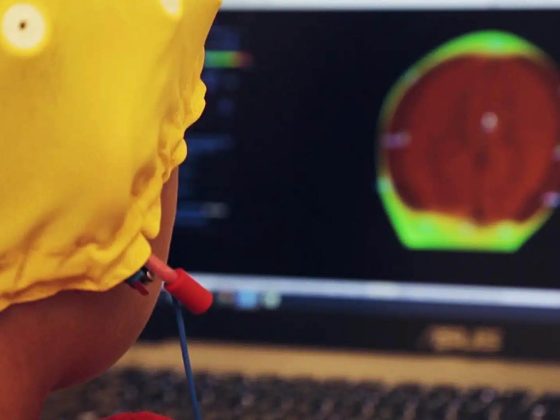
For some people, brain mapping for focus can offer insight into patterns of brain activity related to attention and self-regulation.
Brain mapping can provide information about patterns of brain activity that may be connected to attention, stress response, emotional regulation, or cognitive function. Neurofeedback uses real-time information about brain activity to help the brain practice healthier self-regulation patterns over time.

These tools are not used to label a person or reduce their experience to a scan or measurement. They are used as part of a personalized care plan that may also include sleep support, stress regulation, therapy, mindfulness, nutritional support, ADHD evaluation, or other integrative approaches.
No single path leads to better focus or mental clarity. The deeper question is not simply, “How do I focus better?” It is, “What is affecting my brain’s ability to regulate attention, and what kind of support does my mind and body need?”
If your mind feels scattered, reactive, tired, or unclear, it may not mean you are failing. It may mean your nervous system, sleep, stress response, or brain regulation needs attention.
Get Brain Mapping and Neurofeedback in Orange County, CA
At Integrative Medical Institute of Orange County, we offer brain mapping for focus, mental clarity, and emotional well-being as part of a whole-person approach. Book a Brain Mapping appointment today to better understand your brain activity and what kind of support may be right for you.
Disclaimer: This information is for educational purposes only and does not constitute medical advice.